Factory Compliance in Malaysia: CCC, Fire Certificate, DOSH and DOE Approvals
The approvals a factory in Malaysia needs before and after you move in: the CCC, the yearly Bomba Fire Certificate, DOSH certificates of fitness for boilers, pressure vessels and cranes, DOE rules on waste, and the council and MIDA licences.
Updated 30 Oct 2026 · PropertyMsia
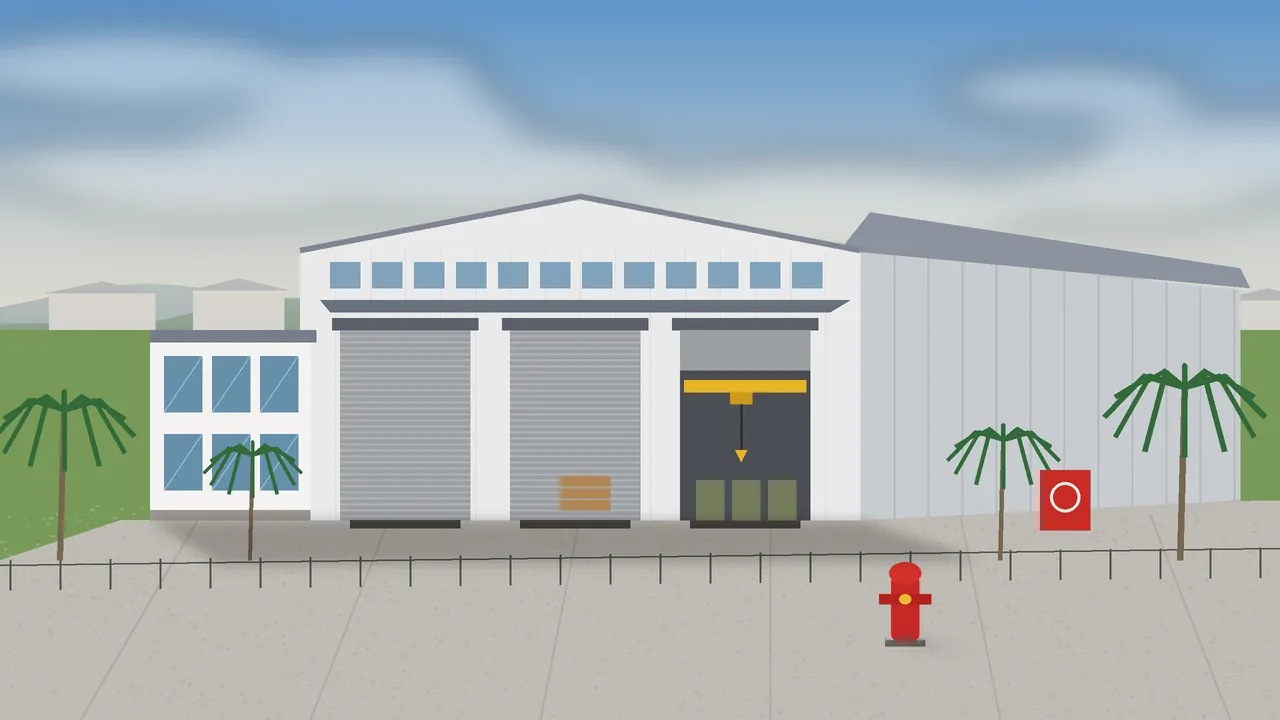
In short: a factory is only as good as its approvals. Before you buy or rent one, check that the building has a Certificate of Completion and Compliance (CCC), that its use matches the land title, and that the fire, machinery and environmental approvals for your operation can be obtained. Missing approvals can delay your move-in, stop production or reduce the value of the property.
1. The building: land use and CCC
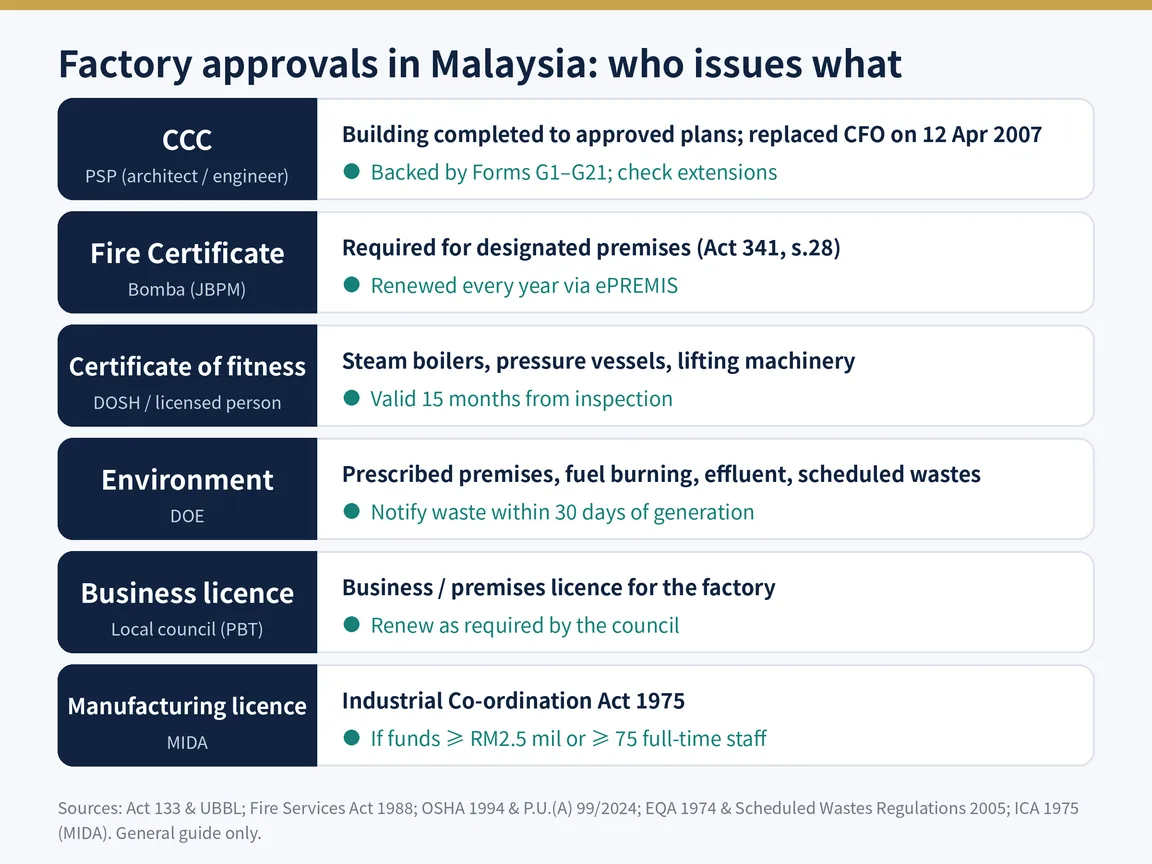
Start with the land. The category of land use on the title should be industrial (Perusahaan), and the local plan should allow your type of industry. Next, ask for the CCC. Since 12 April 2007, the CCC has replaced the old Certificate of Fitness for Occupation (CFO) under the Street, Drainage and Building Act 1974 (Act 133). It is issued by the Principal Submitting Person (PSP) – a registered architect, professional engineer or building draughtsman – not by the local council (PBT).
The CCC is supported by 21 stage forms (Forms G1 to G21). Eight of them need a letter or certificate from a technical agency, including Bomba (G8, G9) and DOSH (G11). Older factories may have a CFO instead. Any extension, mezzanine or added structure needs its own approved plans, so compare the building on site with the approved building plan.
2. Bomba: the Fire Certificate
Under section 28 of the Fire Services Act 1988 (Act 341), every designated premises must have a Fire Certificate (Perakuan Bomba), and it is renewed every year. Which premises are designated depends on their use and size, as set out in a gazetted order, so check with the Fire and Rescue Department (JBPM). Applications and renewals are made through JBPM's ePREMIS system. Keep fire-fighting equipment, hose reels, sprinklers and alarms maintained, and tell Bomba before changing the layout of a designated premises.
3. DOSH: machinery and workplace safety
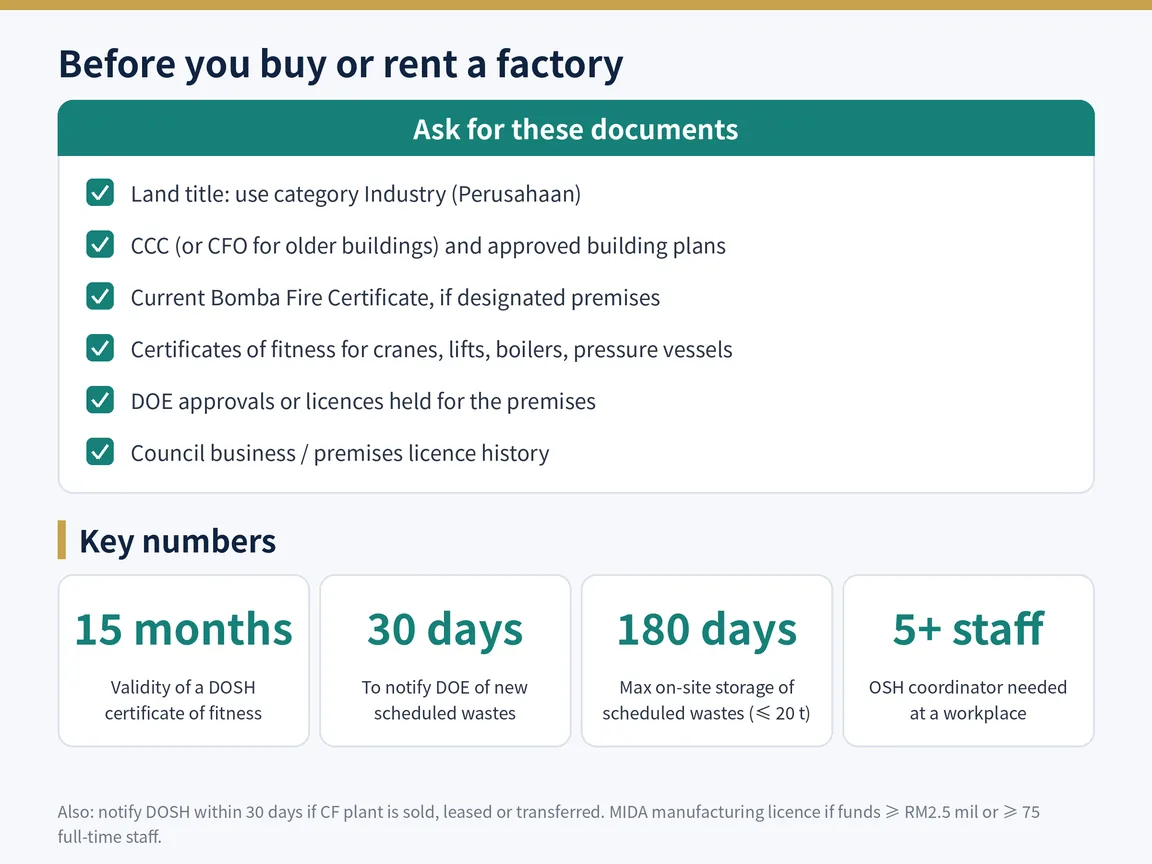
The Factories and Machinery Act 1967 was repealed on 1 June 2024, when the amended Occupational Safety and Health Act 1994 (OSHA) took over. Under the Occupational Safety and Health (Plant Requiring Certificate of Fitness) Regulations 2024, a steam boiler, pressure vessel or lifting machinery (such as overhead cranes, hoists and lifts) needs a certificate of fitness (CF) from DOSH or a licensed person. A CF is valid for 15 months from the date of inspection, and a periodic inspection must be done before it expires. If you sell, lease or transfer such plant, you must notify DOSH within 30 days.
OSHA also now covers all places of work. An employer with five or more employees at a workplace must appoint an OSH coordinator, unless the workplace already needs a safety and health officer.
4. DOE: environmental approvals
The Environmental Quality Act 1974 is enforced by the Department of Environment (DOE). Some activities are prescribed premises that need prior written permission and a licence. Many factories also need written notification or approval before installing fuel-burning equipment or treating industrial effluent. If your process produces scheduled wastes (such as used oil, sludge or chemical waste), you must notify DOE within 30 days of first generating them, and you may store them on site for up to 180 days and no more than 20 tonnes unless DOE approves otherwise. The Environmental Quality (Amendment) Act 2024 sharply raised the fines for many offences, so this is not an area to ignore.
5. Business and manufacturing licences
Most PBTs require a business or premises licence for a factory, renewed regularly. Separately, under the Industrial Co-ordination Act 1975, a manufacturing company with shareholders' funds of RM2.5 million or more, or 75 or more full-time employees, needs a manufacturing licence from MIDA.
Practical tips for buyers, tenants and owners
- Ask for documents early: the title, CCC or CFO, approved building plans, the current Fire Certificate and CFs for any crane, lift or boiler that comes with the property.
- Match the use: food, chemical or heavy processes may need more than the previous occupier had. Check before you sign.
- Put it in the agreement: state who obtains and pays for each approval, and what happens if one is refused.
- Diarise renewals: the Fire Certificate is yearly and each CF runs on its own 15-month cycle.
- Get professional help: use a PSP, a fire safety consultant or an environmental consultant for complex sites.
This is a general guide. Requirements differ by state, council and type of industry, so confirm with the relevant authority.
Looking for a factory with the right approvals, or need help checking one? Chat with PropertyMsia on WhatsApp and we will help you shortlist and check suitable properties.
Talk to a registered agent for free advice on pricing, zoning and due diligence.
Get in touch Industrial Listings